February 27, 2026
Featured Artist
|
Felix Gourlaouen
February 27, 2026
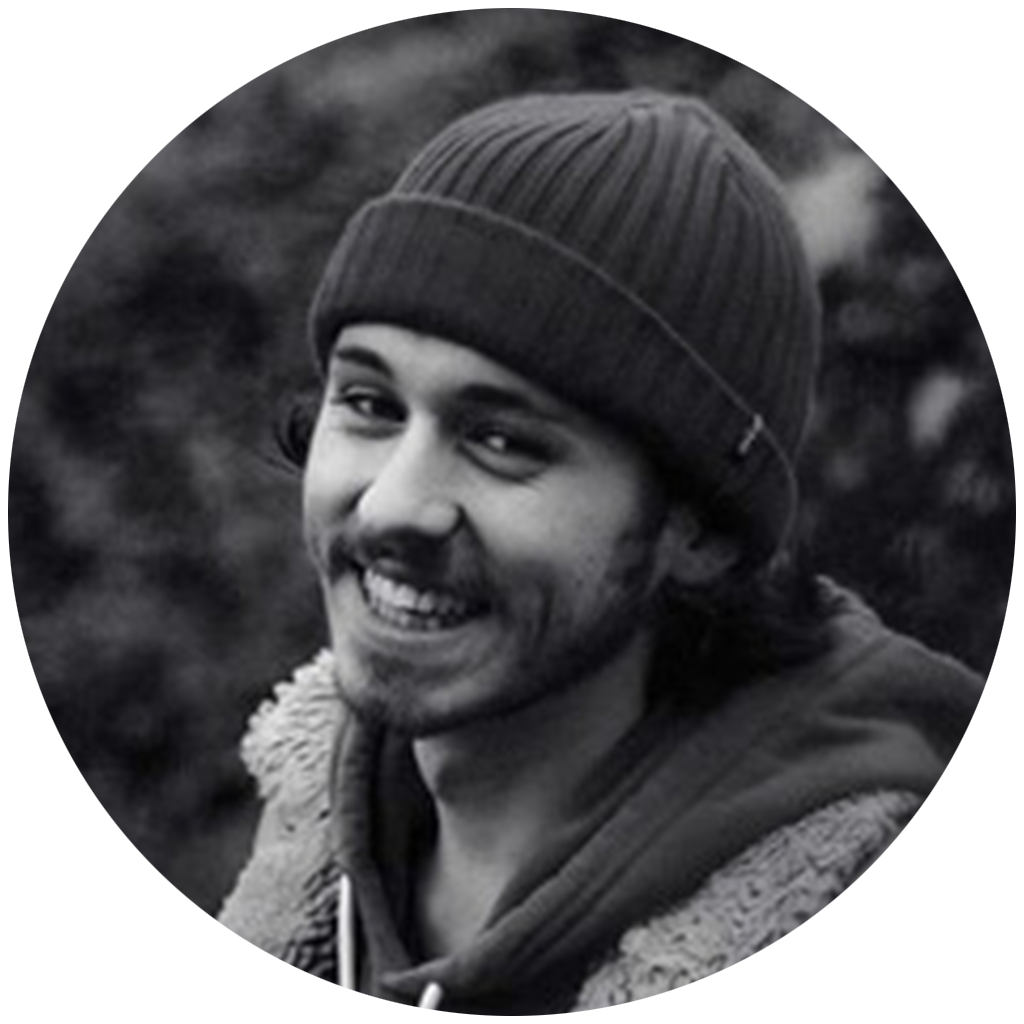
Felix Gourlaouen is a Franco-British 3D artist whose path into computer graphics was sparked by a lifelong love of drawing and a chance encounter with the world of digital sculpting. From his early days in French "plastic arts" classes to finding his footing in the complex world of CG, Felix has learned to embrace the chaotic, collaborative process of computer graphics. Most recently, Felix claimed the top spot in the RenderMan Art Challenge! A testament to his dedication and willingness to put his work out into the world.
We recently sat down with Felix to discuss his artistic journey, the power of community feedback, and why he believes the best art comes from a willingness to constantly iterate.
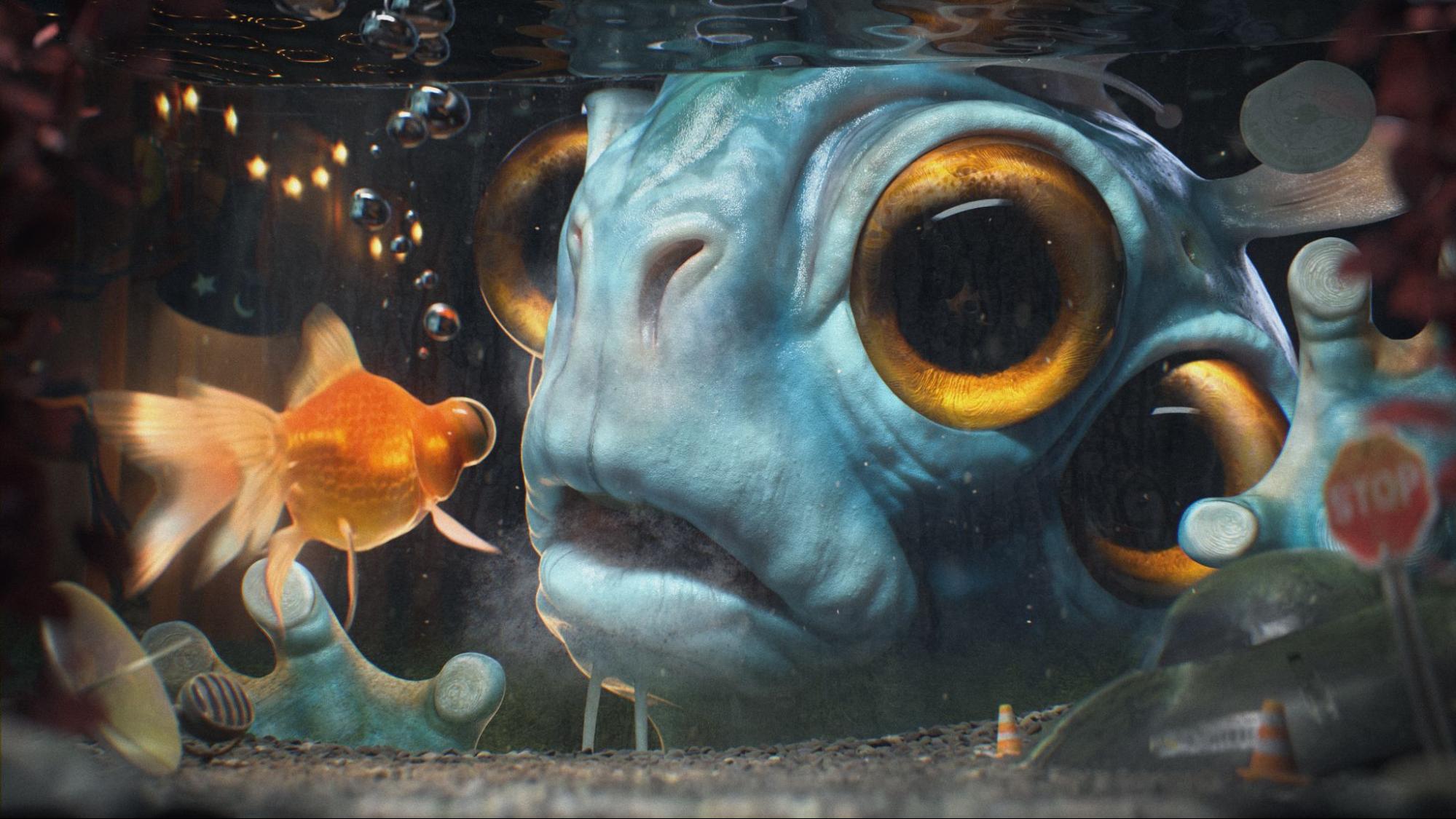
Felix's winning art challenge entry: "Something Fishy"
I've always been interested in the arts in general, growing up drawing and reading a lot of books and comic books. In school, in France, we have art classes which you take until you're about fourteen, and then in high school it becomes an elective. I took the class, and I had an incredible teacher and artist, Pascal Renard, who for three years helped me and pushed me to pursue a career in the arts. At the time, I had no idea what I wanted to do ... I just knew I wanted to do something creative, and he helped me on my way to do that.
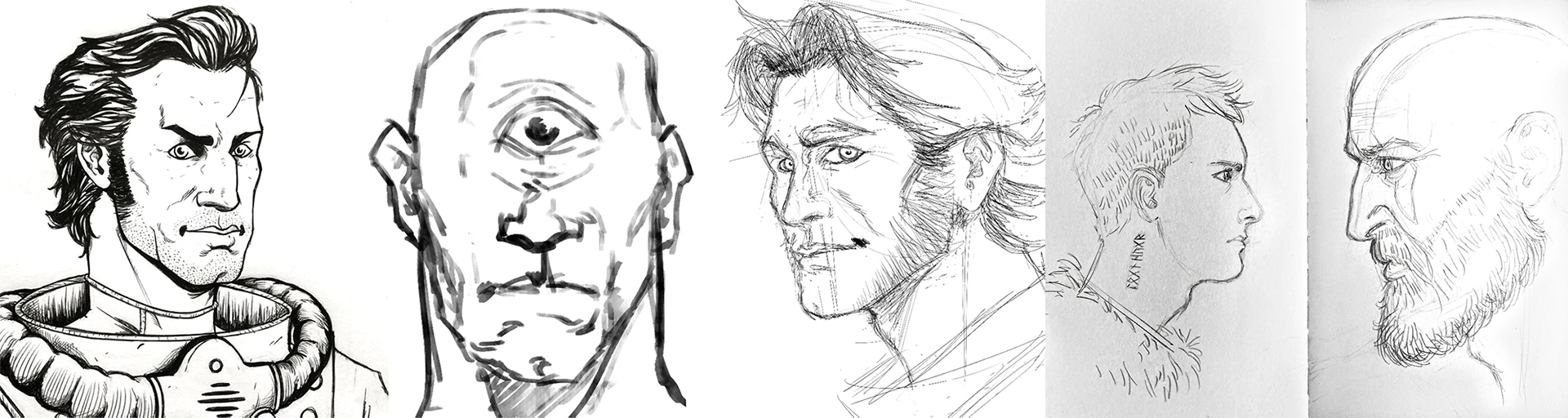
Some of Felix's drawings.
I then discovered ESMA, a 3D animation school in France. Their website caught my eye because it was made entirely of student work, which spoke volumes to me. I remember seeing a short film called Chateau de Sable, and that was it. I went to ESMA with the vague idea of being an animator, a word that just meant everything and nothing to me at the time.
ESMA really focuses on generalist teaching, which means students leave knowing about a lot of different disciplines, including learning Renderman. Because of this, my first year was quite chaotic and I really struggled. I didn't really see beyond my year of study and didn't know what I was doing it for, what the aim truly was. I was getting drowned in so much work, and I was just doing it without taking a step back ... My grades were barely passing.
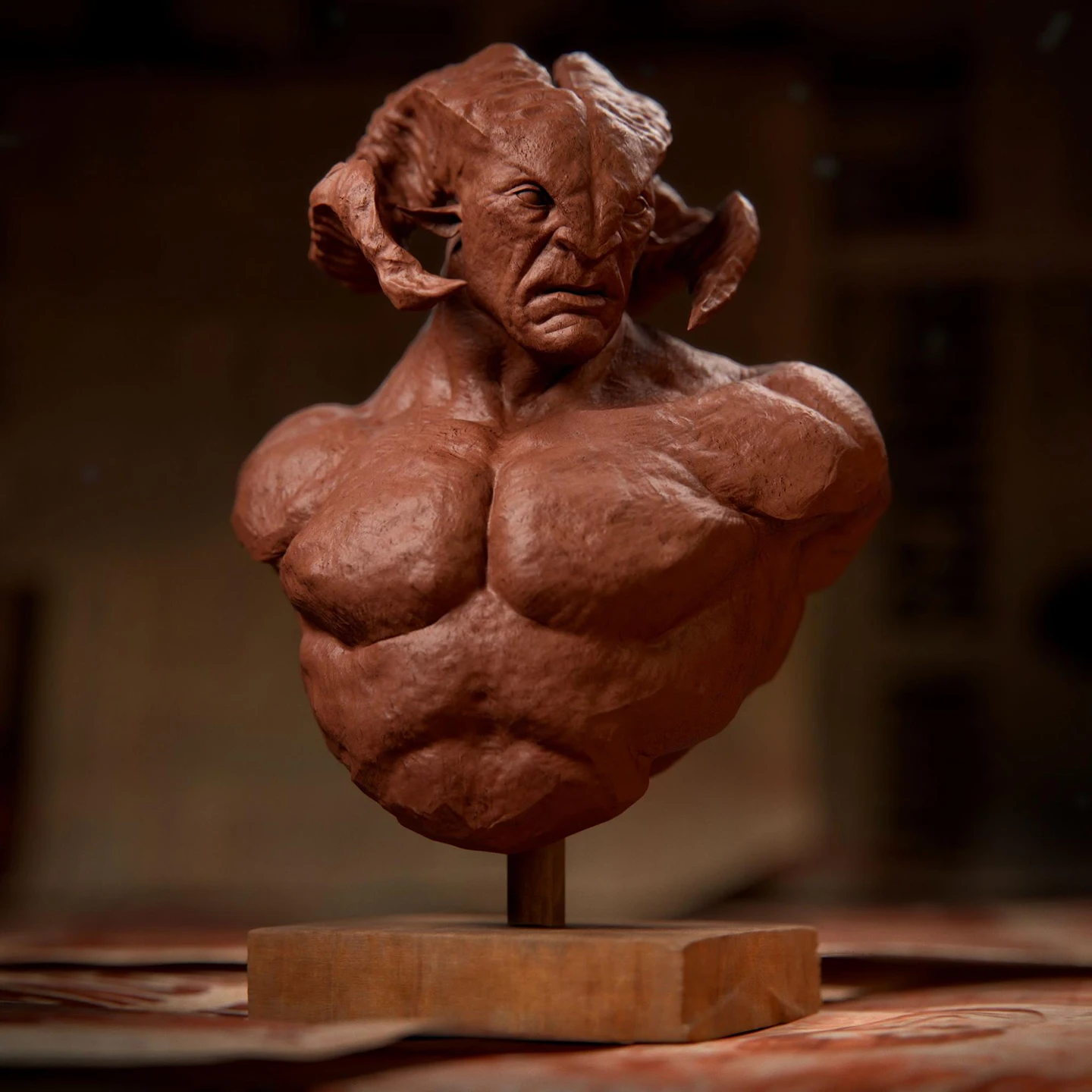
Digital clay bust, rendered with RenderMan.
However, literally the week after the end of my first year, I went to the Annecy Film Festival where everything just clicked, thanks to a talk by Framestore. They showed a reel with all the best creatures out there—from Paddington and Harry Potter to Marvel films—and my mind was blown. I realized, "Hang on, you can do this? What I've been learning for a year can be useful for this!" The next day, for the first time, I saw an artist named Sam Rowan use ZBrush, and I was like, "What on earth is that? I need to try that!" As soon as I got back, I downloaded ZBrush and since then, I've spent every spare minute I have on it.
It's fun looking back at my early struggles, to see how it transformed into being top of my class in my last year of studies, and to see that I've come a long way since. I also owe a lot to the guys at Flipped Normals, who furthered my sculpting knowledge with their Youtube videos.
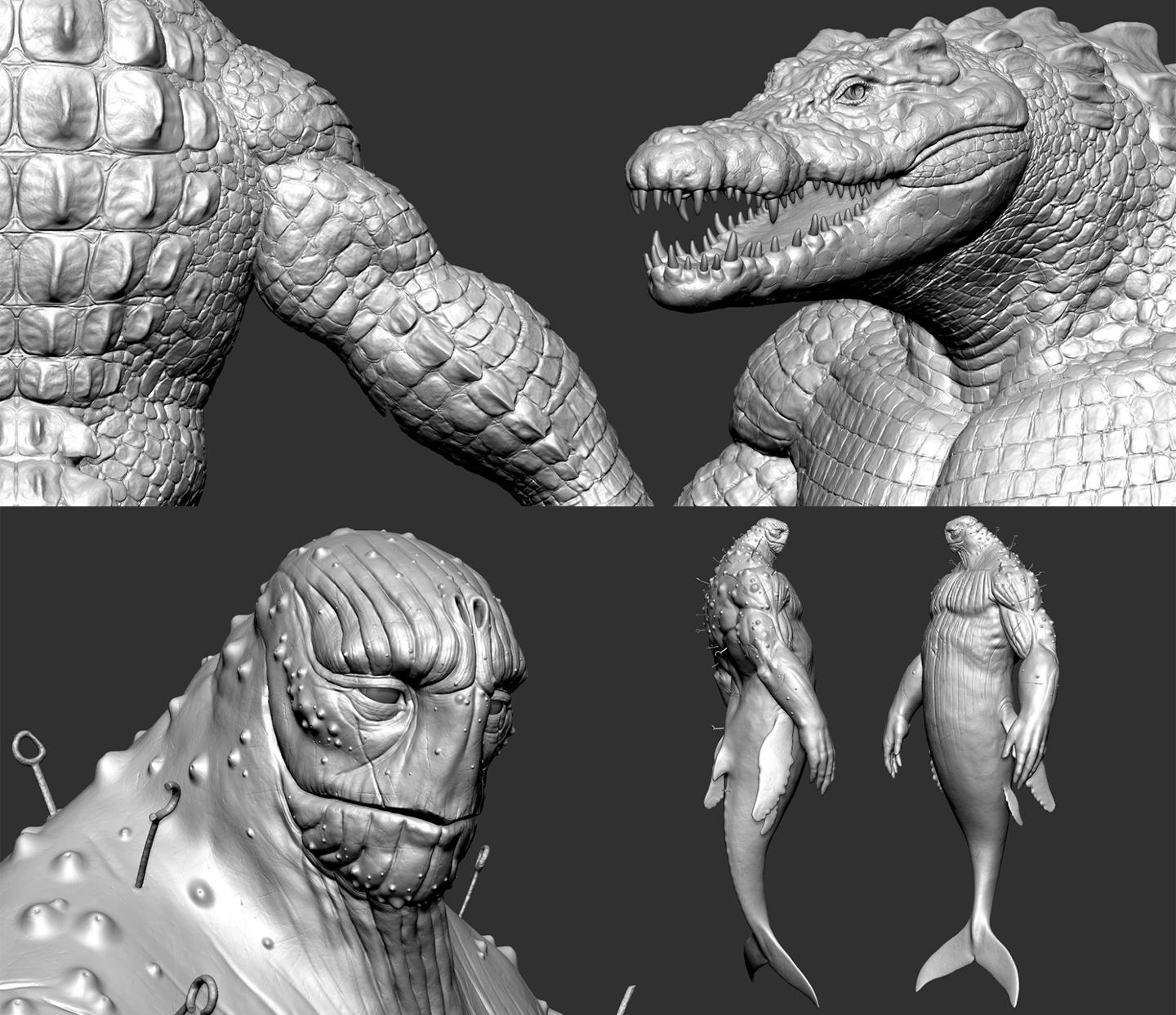
Recent Zbrush projects made by Felix.
Funnily enough actually, during that same week at Annecy in 2019, I attended a talk held by Pixar’s Dylan Sisson. He then posted a picture on social media where you can spot my partner Noémie Layre – also an art challenge winner – and I in the crowd!
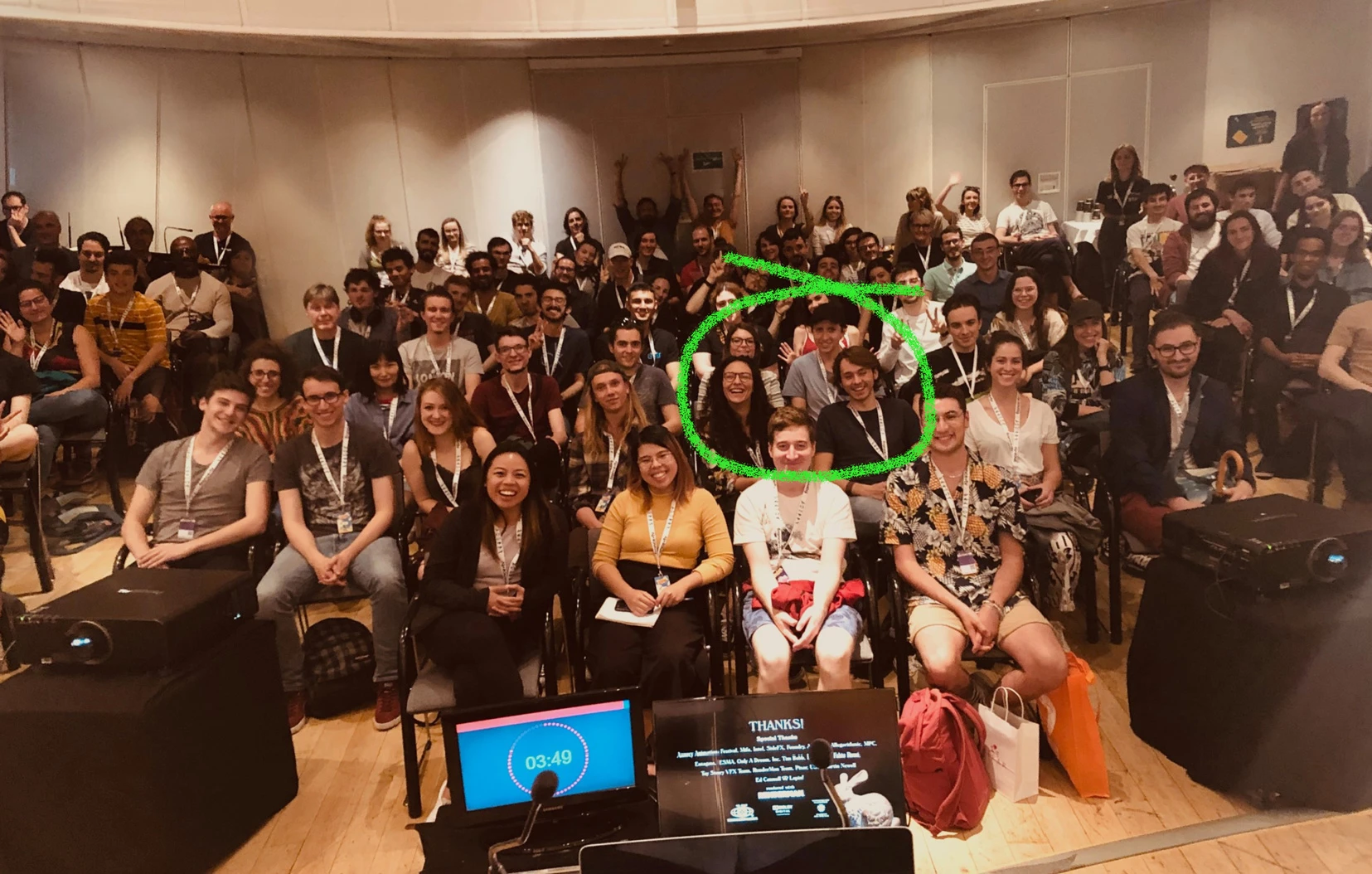
Felix and Noemie at a RenderMan talk at Annecy..
It really exceeded my expectations. I'm at a place where I can focus on the creative aspect and not be intimidated by the technical aspects of CG, so participating felt like the right step for me. When the theme was announced, I was at a friend's house with my partner Noémie and we spent the evening on a terrace, lit by fairy lights, just sketching and brainstorming ideas together. It's such a fun memory to look back on now.
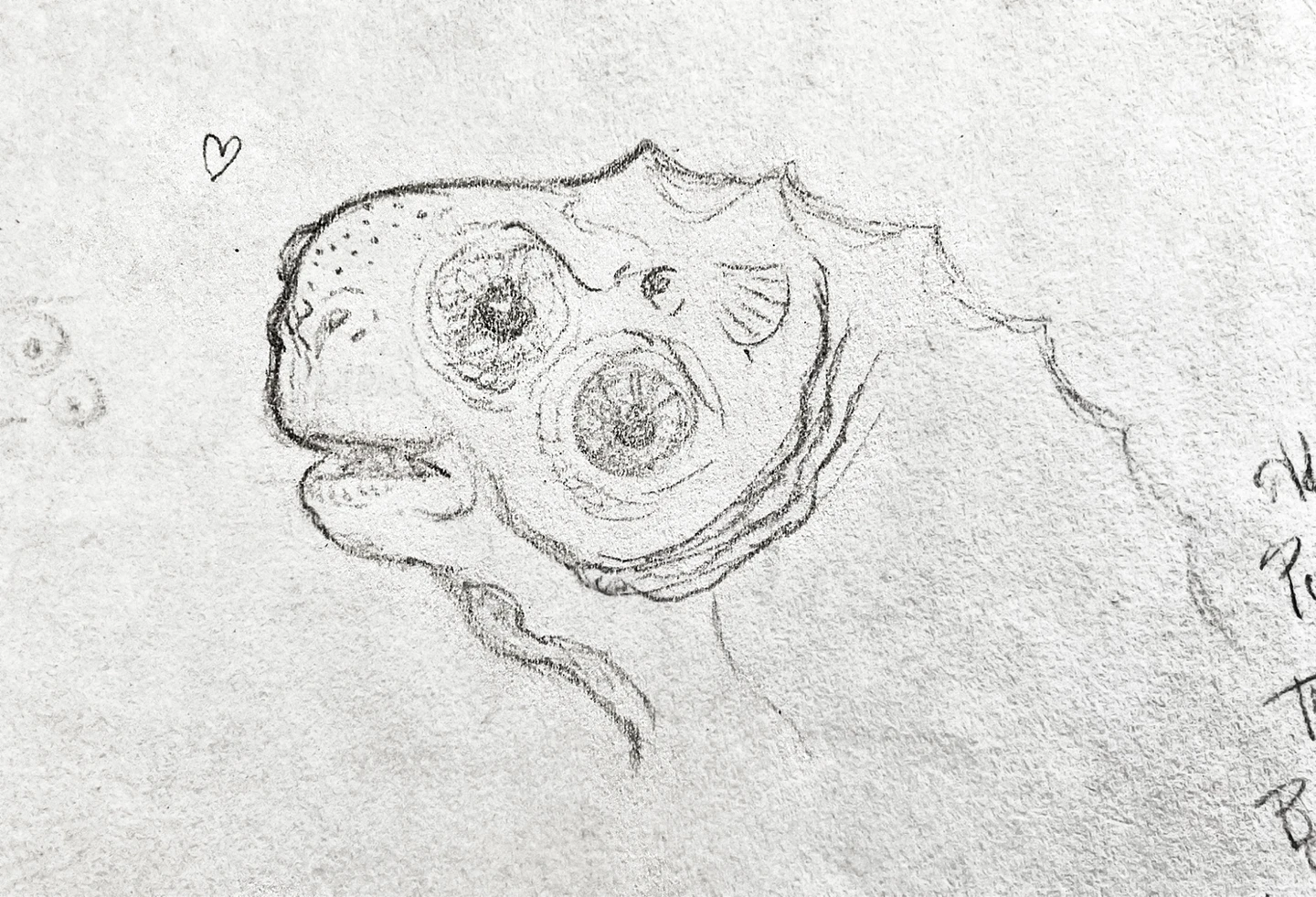
Felix’s initial alien concept sketch.
The experience of participating was amazing. Seeing people enter the art challenge with so many different skill levels was really inspiring. Some people were just starting out but were giving it their all, showing their work and getting feedback. Sometimes you work on something for months, and it's at a cool stage, but you're still like, "Oh, it's not finished, what are people going to think?" But people were posting their work and saying, "Please critique it, it'll be better next week," and it was!
The community was so supportive and I especially loved the Zoom feedback calls, where we got bits of wisdom from industry professionals. The nature of the feedback was always incredibly positive, always supporting the ideas and never trying to get people to stray from what they wanted to say. "How can we make this better" as opposed to "that's not good enough". I thought that made a world of difference.
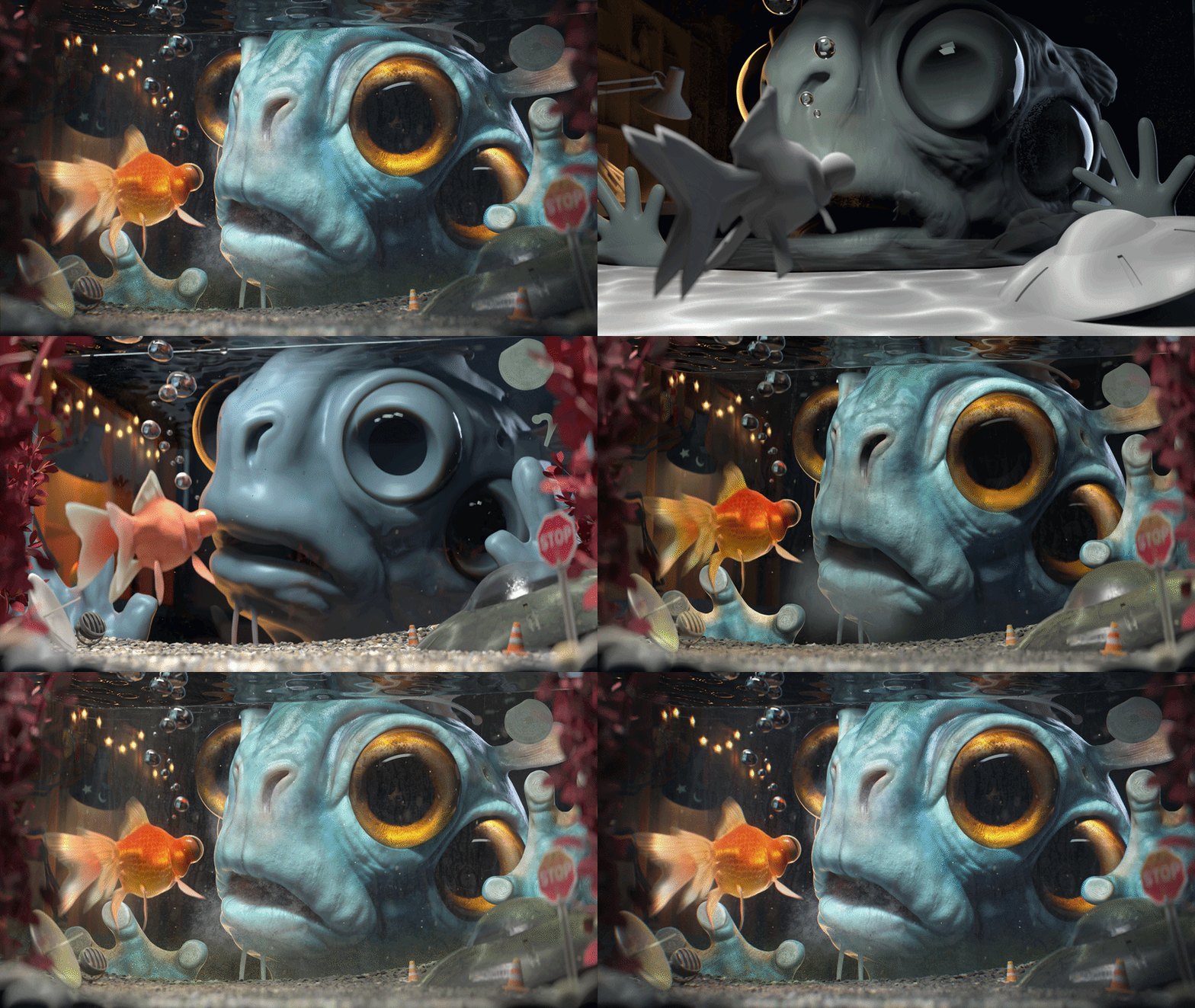
Step by step process of “Something Fishy.”
Honestly, before the judging results were even announced, participating was already a win in my book. Initially, when I started, I felt more competitive with aspirations to win, but as time went on and I kept working, I realised, "Actually, who cares? I'm having fun, people are enjoying my work, and my family and friends are enjoying it too. That's already a win." The results were just the cherry on top!
I’m a massive cinephile. I watch a lot of films, regardless of the genre—I love deep, heavy dramas, and documentaries as well as popcorn flicks and watching Marvel movies! A lot of my storytelling inspiration comes directly from the cinema I consume.
Beyond film, I’m into myths and mythology, and comic books are still a huge source of inspiration for me. One of my favorite creative challenges as an artist is looking at a single, hand drawn 2D frame in a comic and figuring out how to give it a third dimension. I also read a lot of fiction, and I love using my 3D skills to illustrate and bring to life the characters as I imagine them while reading. I’ve recently bought an iPad Pro which has really helped bring some more fun into sculpting, enabling me to do it on the go as opposed to being sat in front of my computer.
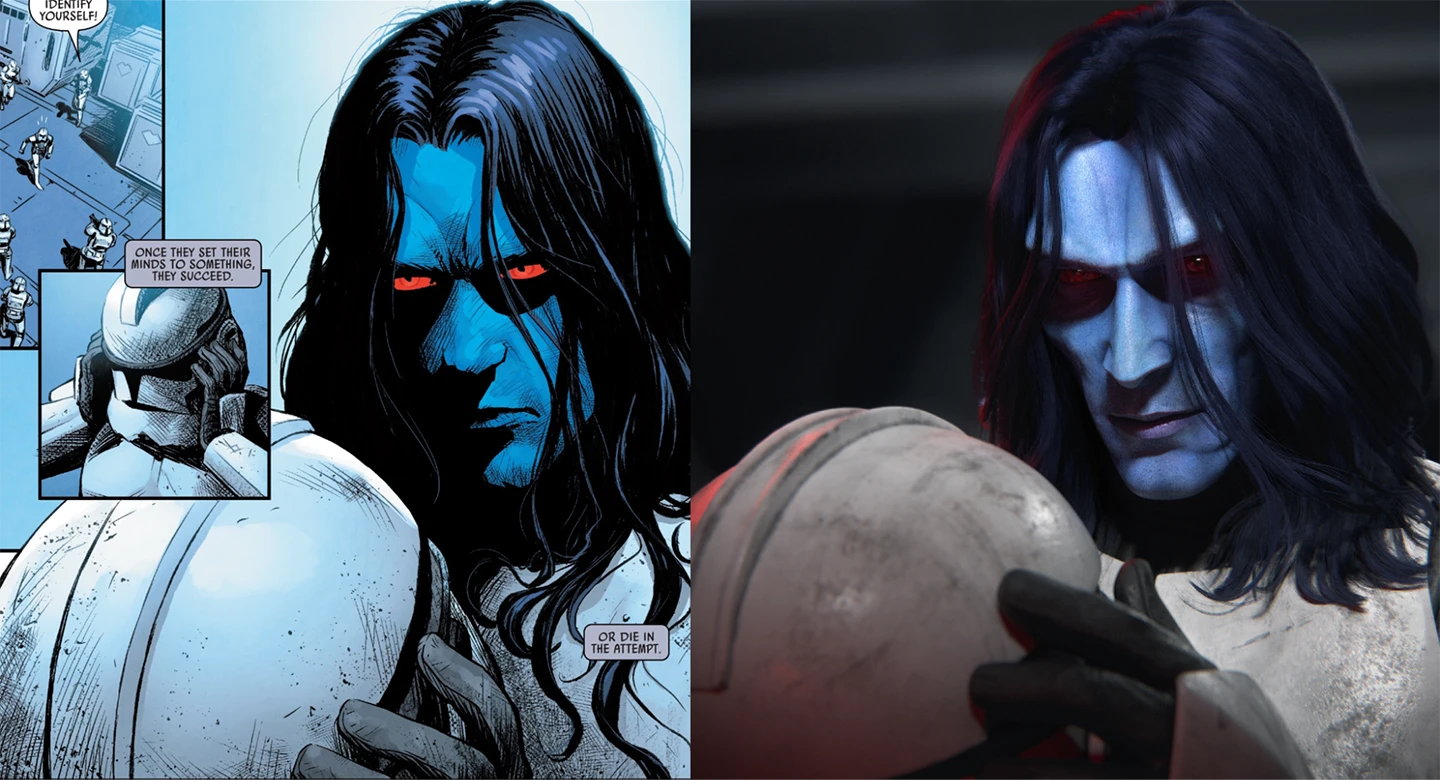
Example of 2D to 3D work by Felix. Original art by Luke Ross.
You definitely have to be open to feedback. If someone has an idea, don't dismiss it. See if it fits. People will always have something to say about your work, whether a technical thought or emotional response, whether they like your art or not. Welcoming those notes will always enrich your art, even if you don’t end up applying them. You should always question your work, your intentions, your meaning. Maybe the latter just hasn't come across yet. If you wrap your arms around your work and refuse to let anyone in, it's never going to reach its full potential. You have to be willing to iterate, to let your project grow.
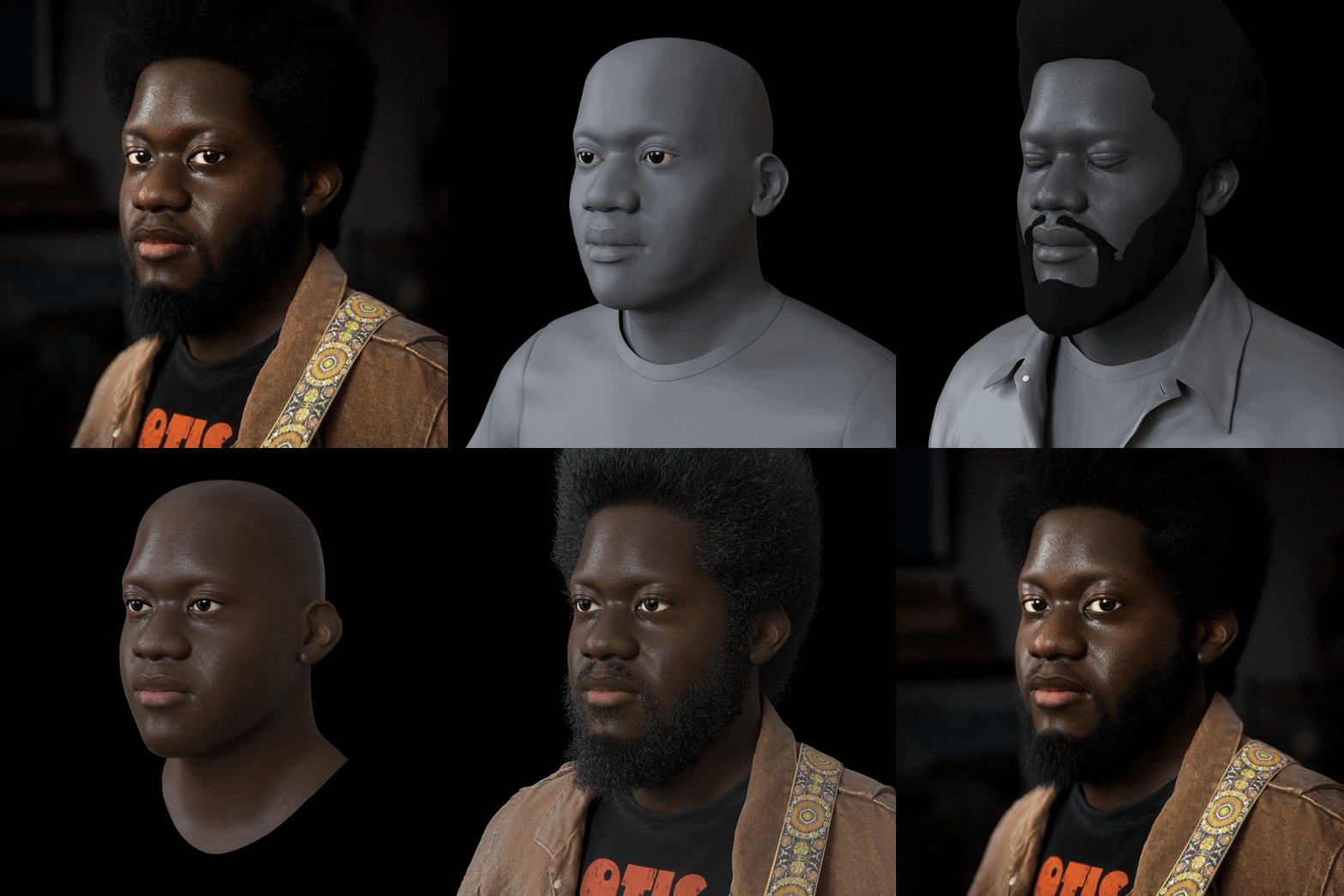
Step by step process of a digital double of Michael Kiwanuka.
Completing an image is a wonderful feeling though... and I like the idea that once an image is done, it's an image and not my image. If you succeed, it should take a life of its own. People will see the story I'm trying to tell, or maybe connect with it on a personal level. One of my friends told me she was moved by my final submission and that meant a lot to me. It's really special to know that I was able to create an image that connected with someone so powerfully.
The competitive nature of an artist is by design. If you're creating something, you have a vision that you need to put on paper or on the screen, and no one else is going to tell you how to do it. You're pushing yourself to be better. There are a lot of people who unfortunately get discouraged when they see something better than their own work. Instead of feeling defeated, I like to flip that mental switch and say, "Hang on, this is amazing. One day my stuff will be that good!"
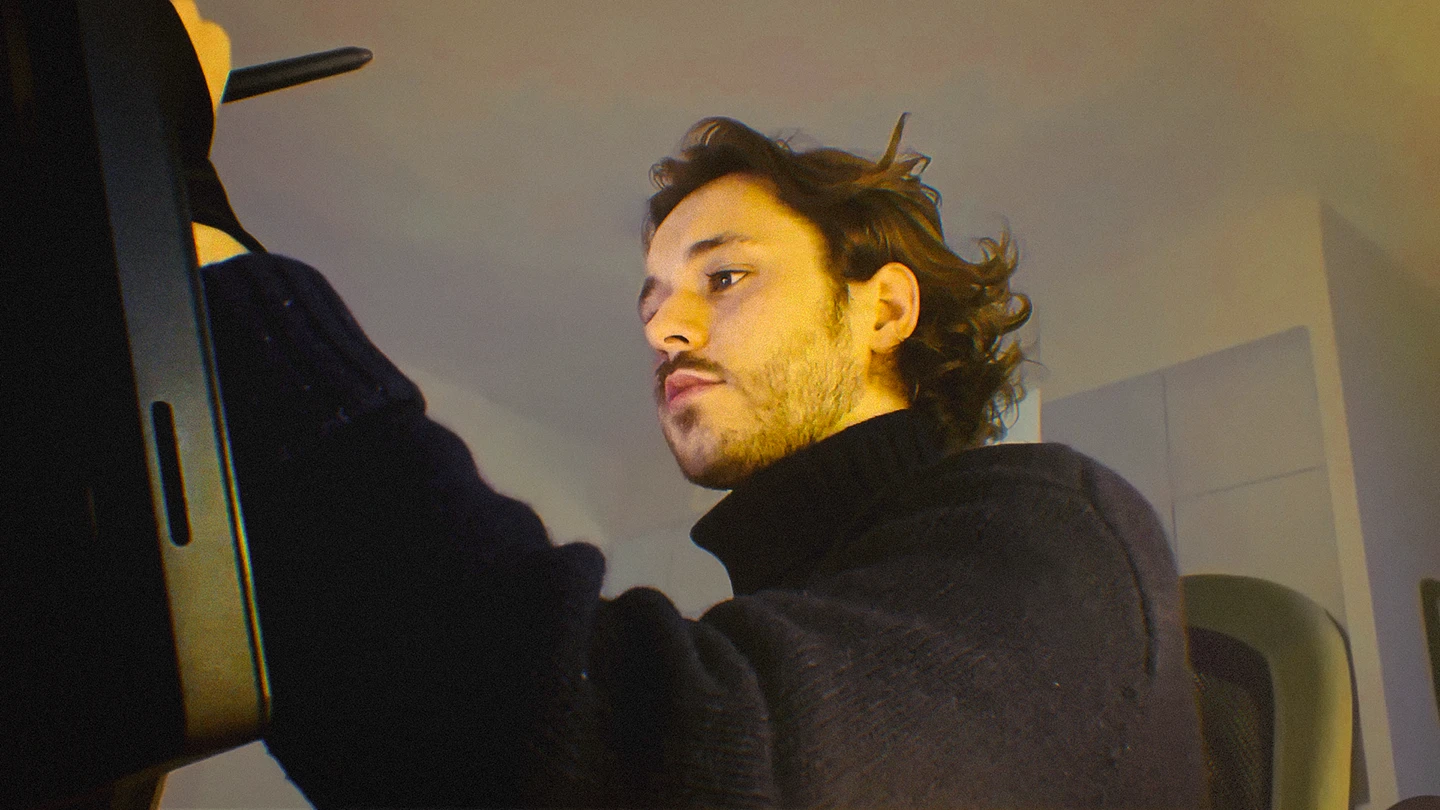
Felix, using his new Xencelabs Pen Display 24, won in the challenge.
My lifetime career goal is to one day work at companies like ILM, Framestore, or Weta as a creature or character modeler. For now, my short-term goal is to work on film. I’ve worked on commercials and small creature projects over the past three years, but film is really the ultimate goal for me.
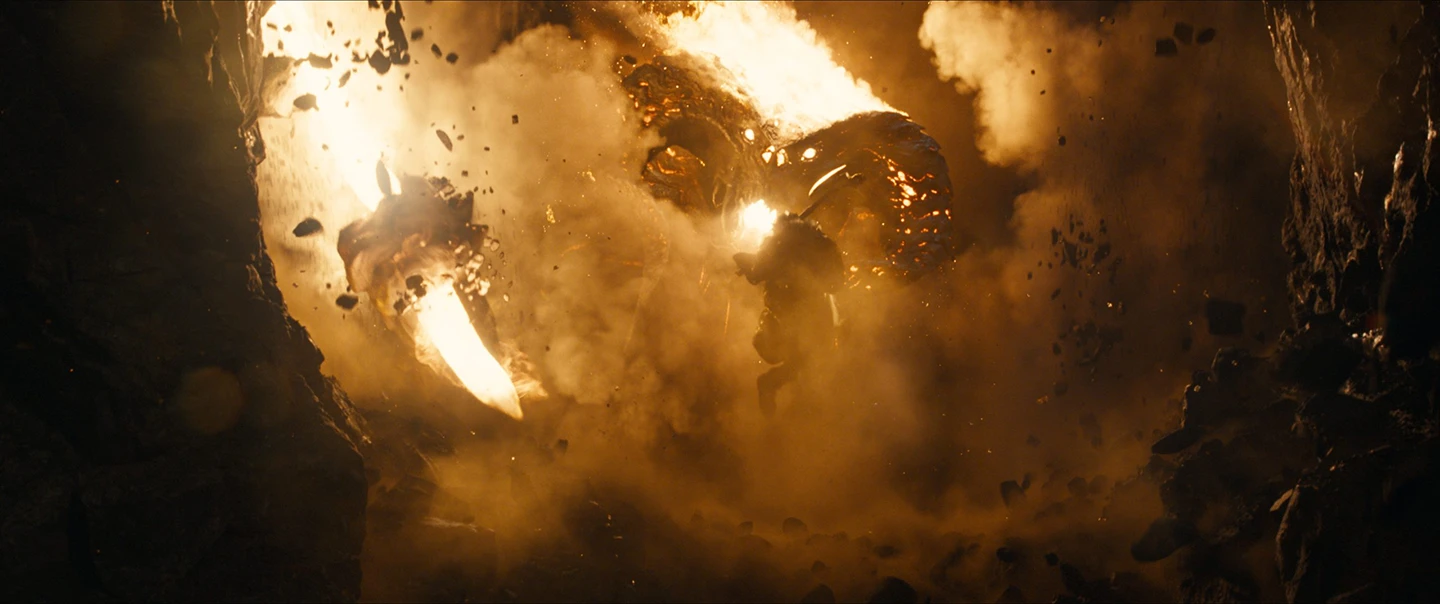
Film characters and creatures are a huge inspiration for Felix.
Be nice! It sometimes comes down to the simplest things, like how you communicate through email. So far, my professional experiences have been fully remote and I’ve been really lucky to have incredibly kind people on the other end of the line. Saying things with intent and kindness can go a long way.
Also just keep creating and pushing your ideas. Don't be afraid to show your work and get feedback.
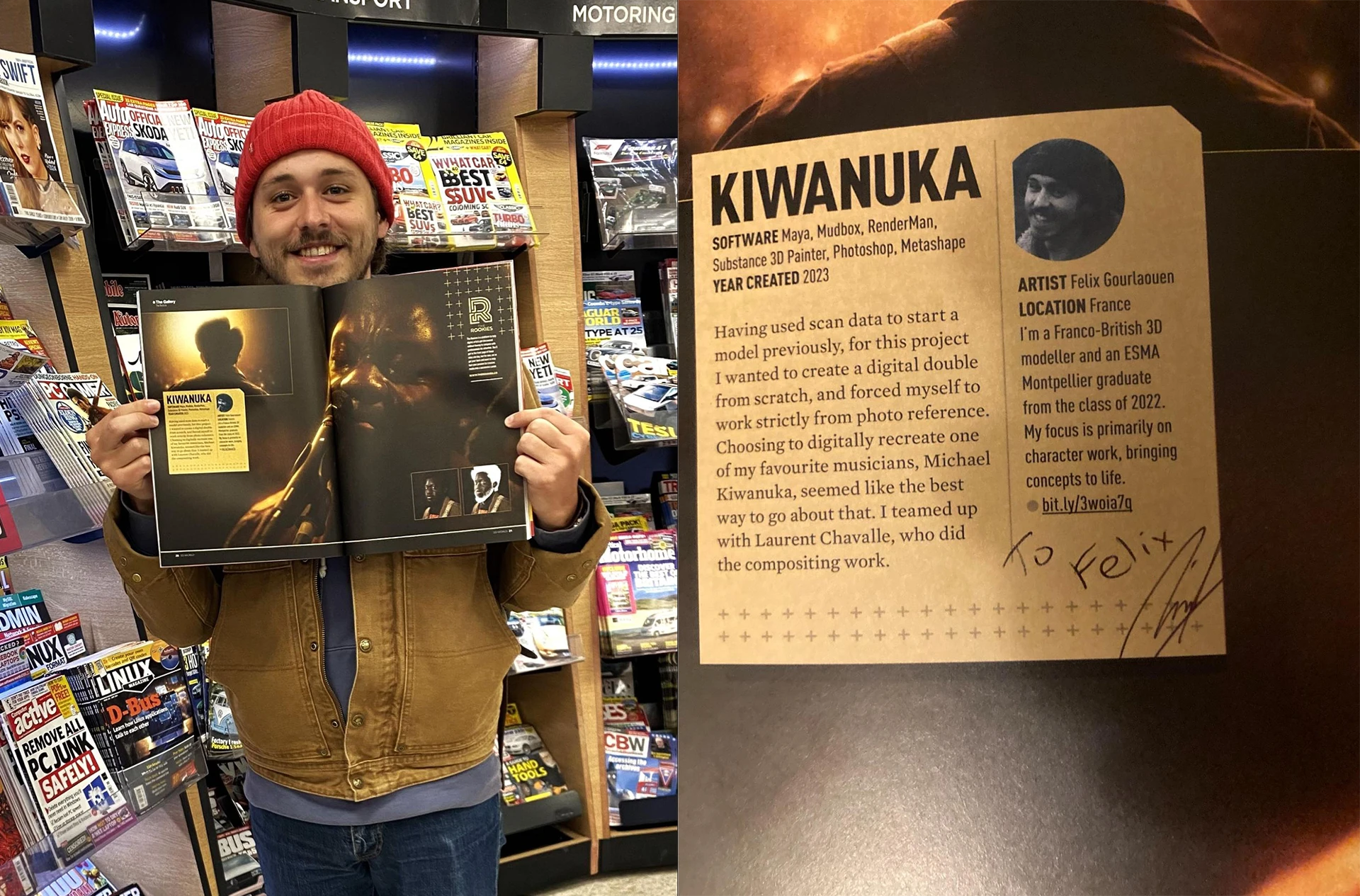
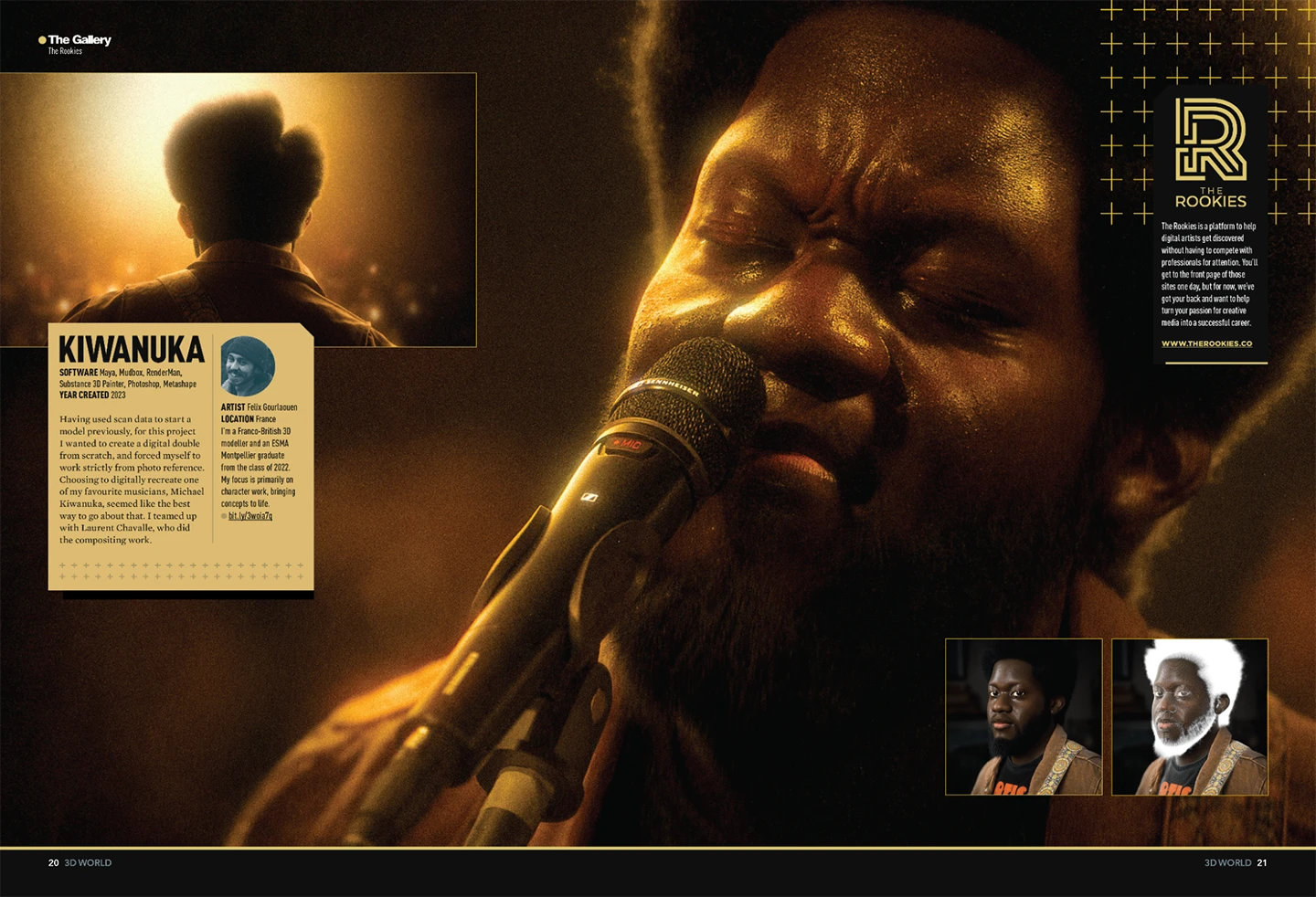
I’ve been lucky enough in the past to have had my work published in 3D World Magazine, thanks to the Rookies. My portrait of singer Michael Kiwanuka on a double-page spread is something I’m extremely proud of. It has even come full circle as I was able to get my copy of the magazine signed by Michael Kiwanuka himself!
Another valuable lesson I’ve learned is that in this changing industry it’s good to diversify your skillset ... have more tools in your belt. Learn more generalist skills so that you can have a broader job market at your disposal, especially as AI is drawing more and more attention and the future of creativity is a bit of a moving target.
With so many artists out there, getting a response to an application can be hard. As an artist, you have to know how to advertise yourself and put your work out there. You have to find a way to let people know you exist. Keep pushing, keep working, and eventually, doors will start opening.
In-depth how to's for all levels of users
Shaders, scripts, scenes
And other useful things